
Luxury Home Renovation Cost NYC: The 2026 Budgeting Guide for High-End Residences
- ArGetsBuckets -
- Jul 5
- 12 min read

In the 2026 NYC real estate market, a luxury label on a renovation proposal is no longer a guarantee of excellence. It's often a mask for administrative oversight and fragmented management. You recognize that a high-end residence requires more than just premium materials. It demands a meticulous navigation of the city's shifting regulatory environment. This guide provides the definitive framework for calculating your luxury home renovation cost nyc, ensuring you account for every architectural soft cost and administrative fee before the first hammer swings.
Mastering a Manhattan budget means looking far beyond the surface. We'll explore how the January 2026 digital board attestation requirements and the "One-Job Rule" for superintendents are reshaping project timelines and overhead. You'll gain a clear understanding of the ROI found in master craftsmanship and the management precision required to satisfy a discerning co-op board. This article breaks down the complexities of 2026 budgeting, from the updated $130 DOB filing fees to the logistical taxes of pre-war upgrades. It's designed to lead you from initial inspiration to a feeling of total confidence in your project's execution.
Table of Contents
The Architecture of Investment: Defining Luxury Home Renovation Costs in NYC (2026)
Primary Cost Drivers: Materials, Master Craftsmanship, and Technical Mastery
Room-by-Room Financial Breakdown: Kitchens, Bathrooms, and Dry Spaces
Navigating the "Hidden" Costs: Co-op Boards, DOB Compliance, and Logistics
Optimizing Your Investment: The Efficiency of the Design-Build Model
The Architecture of Investment: Defining Luxury Home Renovation Costs in NYC (2026)
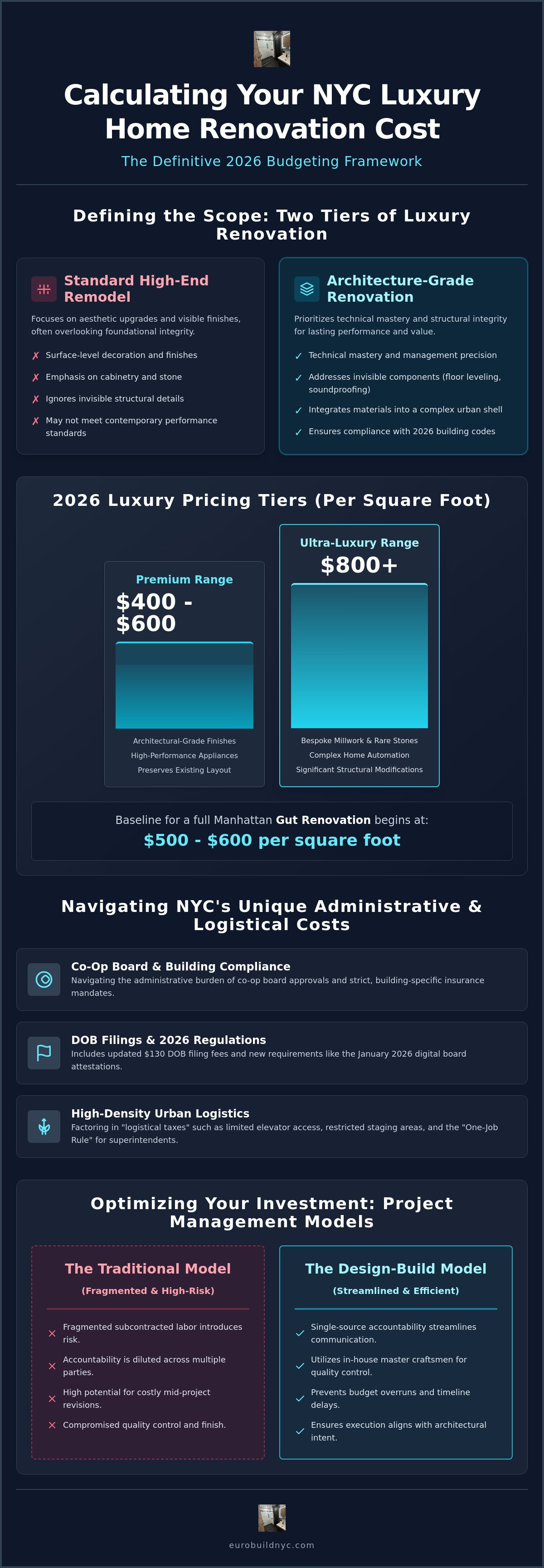
NYC stands alone as a singular economic environment. National data on remodeling is essentially irrelevant when planning a Manhattan or prime Brooklyn residence. The real luxury home renovation cost nyc is dictated by a unique intersection of high-density logistics and uncompromising administrative compliance. The process of improving a high-end property here requires more than aesthetic upgrades. It demands "Architecture-Grade" execution. This standard prioritizes technical mastery and structural integrity over mere surface-level decoration. It's the difference between a project that looks premium and one that performs at a professional level for decades.
Architecture-grade work is characterized by management precision. It addresses the invisible components of the home, such as leveling floors in centuries-old buildings or installing soundproofing that meets contemporary standards. Standard high-end remodeling often ignores these foundational elements in favor of cabinetry and stone. In NYC, these structural details are what decouple luxury costs from the rest of the country. You aren't just paying for the material; you're paying for the expertise required to integrate that material into a complex urban shell.
Gut Renovation vs. High-End Refresh
Deciding between a refresh and a gut renovation is a pivotal financial choice. A high-end refresh might involve new wide-plank flooring and updated kitchen remodeling without altering the existing footprint. A gut renovation is a total transformation that involves stripping the residence to its structural studs. This is often necessary in pre-war buildings where outdated electrical and plumbing systems cannot support modern luxury amenities. Uncovering these systems early prevents future failures and ensures the residence meets 2026 building codes.
For a full Manhattan gut renovation in 2026, the baseline investment for an architecture-grade outcome typically begins at the $500 to $600 per square foot mark.
The 2026 Luxury Pricing Tiers per Square Foot
Understanding current market tiers is essential for realistic planning. These figures represent the construction and management costs required for high-caliber results in the current NYC environment.
Premium Range ($400-$600 psf): This tier focuses on architectural-grade finishes and high-performance appliance packages. It's ideal for whole home renovation projects that preserve the existing layout while elevating every material and fixture.
Ultra-Luxury Range ($800+ psf): This level is reserved for projects requiring bespoke millwork, rare exotic stones, and complex home automation. These budgets often account for significant structural modifications and specialized artisanal trades.
While these ranges provide a framework, square footage is merely a baseline. The final luxury home renovation cost nyc is influenced by building-specific logistical taxes. These include limited elevator access, restricted staging areas, and the administrative burden of co-op board approvals. Precision in the early budgeting phase is the only way to ensure a predictable project trajectory and long-term ROI.
Primary Cost Drivers: Materials, Master Craftsmanship, and Technical Mastery
When evaluating your luxury home renovation cost nyc, it's essential to look beyond the surface. A high-end budget isn't merely a list of expensive materials. It's a financial map of the technical mastery required to execute a complex vision. In 2026, the primary drivers of these costs have shifted from simple material procurement to the management of specialized trades and global logistical precision. You aren't just buying a kitchen; you're investing in the senior-level oversight that ensures every miter joint and stone vein aligns with architectural intent.
The Value of In-House Master Craftsmanship
The standard model of subcontracting labor introduces significant risk to a high-end project. It creates fragmentation. It dilutes accountability. It compromises the finish. Architecture-grade results require the steady hand of in-house master craftsmen. When carpenters and tile setters are permanent members of a firm, they share a unified standard of excellence. This continuity is vital for specialized tasks like book-matching rare marble or installing custom-integrated millwork. These trades command a premium because their work dictates the longevity of your residence. Precision today prevents the structural failures of tomorrow. To understand how to vet these experts, consult our guide on Luxury Home Renovation Contractors NYC: A Guide to Selecting Your Premium Partner.
Material Procurement and Global Logistics
Sourcing rare materials in 2026 involves navigating a sophisticated global supply chain. Importing European fixtures or artisanal stones requires more than a purchase order. It requires a logistical strategy. Manhattan's restricted staging areas make "just-in-time" delivery a necessity rather than an option. You must account for the costs of climate-controlled warehousing and specialized transit. Furthermore, administrative hurdles can impact the timing of these deliveries. Resources for Navigating DOB Compliance show that regulatory timing often dictates when materials can safely arrive on-site. Custom millwork, in particular, carries a logistical premium due to its fragility and the need for precision climate control during installation.
Technical complexity adds another layer to the modern budget. Integrated smart home systems and hidden HVAC units require meticulous planning. These systems must remain invisible to the eye yet remain fully accessible for maintenance. Precision in management is the primary lever for controlling the luxury home renovation cost nyc. By utilizing a single point of contact, you eliminate the "blame game" between disparate vendors. This single-source responsibility reduces long-term financial risk and ensures the project moves with methodical efficiency. For those who value their time, choosing a single-source renovation partner is the most logical path to a predictable, high-caliber result.
Room-by-Room Financial Breakdown: Kitchens, Bathrooms, and Dry Spaces
Kitchens and bathrooms represent the financial anchors of any high-end project. These "wet spaces" require a level of technical coordination that exceeds the requirements of living areas, primarily due to the stringent plumbing and waterproofing standards found in NYC high-rises. While the average NYC renovation cost per square foot provides a baseline, architecture-grade wet spaces consistently sit at the peak of that spectrum. Precision in these areas is non-negotiable. A single failure in waterproofing or drainage can lead to catastrophic administrative and structural complications within a co-op or condo environment.
The Luxury Kitchen: A High-Impact Investment
In 2026, the luxury kitchen is defined by seamless integration and professional-grade performance. It's no longer sufficient to simply install high-end appliances like Sub-Zero or Wolf. The real investment lies in the bespoke millwork required to conceal these units within a unified architectural vision. Custom integrated cabinetry must be engineered to withstand the weight of heavy stone slabs and the rigors of daily use. Stone selection also plays a critical role. Quartzite and rare marble varieties require specialized fabrication techniques to ensure vein-matching across expansive islands and backsplashes. For a deeper analysis of these standards, see our Kitchen Renovation NYC: The 2026 Guide to Luxury Standards and Seamless Execution.
The Spa-Grade Master Bathroom
Master bathrooms have evolved into private wellness suites. This transition involves more than aesthetic changes; it requires significant mechanical upgrades. Installing a digital steam shower or a curbless entry wet room demands precision in floor pitching and specialized waterproofing membranes. In older NYC towers, relocating plumbing fixtures to accommodate a new layout often involves "trenching" into concrete slabs, a process that requires both board approval and structural oversight. These technical requirements are what drive the luxury home renovation cost nyc upward in high-density environments.
Dry space luxury is defined by tactile quality and invisible technology. Wide-plank European oak flooring and hand-applied Venetian plaster finishes create a sense of permanence that paint cannot replicate. When planning master suite expansions or open-concept conversions, you must balance the investment across the entire footprint. Lighting is another critical "dry" element. It's not just about the fixtures; it's about the sophisticated control systems that manage ambiance and energy efficiency. By allocating resources methodically, you ensure that every square foot of the residence reflects the same level of technical mastery and craftsmanship.
Navigating the "Hidden" Costs: Co-op Boards, DOB Compliance, and Logistics
Administrative transparency is the hallmark of a professional renovation firm. In Manhattan, the luxury home renovation cost nyc is significantly influenced by factors that never appear on a floor plan. These "hidden" costs represent the price of urban compliance and the logistical precision required to work in high-density, high-value environments. You aren't just paying for construction. You're paying for the specialized management that protects your investment from legal and building-level liabilities. This "Manhattan administrative premium" is what ensures your project survives the scrutiny of both the city and your neighbors.
Co-op and Condo Board Management
Navigating building-level regulations is often more complex than the construction itself. Since January 26, 2026, co-op and condo boards must digitally attest in the DOB NOW system that they've reviewed and approved plans before any permit filing is accepted. This adds critical weeks to the timeline. Boards also mandate specific non-refundable fees, such as alteration agreement fees ranging from $1,000 to $5,000 and building architect review fees between $1,500 and $3,000. Managing these "white-glove" building requirements is essential to avoid costly work stoppages or fines. For high-end residences, administrative compliance typically accounts for 10% to 15% of the total project budget.
Permits and Professional Filings
Administrative precision extends to the Department of Buildings (DOB) and, for historic properties, the Landmarks Preservation Commission (LPC). Effective December 21, 2025, the minimum DOB filing fee is $130, but the total cost of filings scales with construction complexity. You must also account for asbestos testing and lead abatement, which are mandatory in nearly all pre-war NYC residences. In the 2026 regulatory environment, utilizing professional expeditors is a necessity. They ensure your filings move through the system without the delays that often plague unmanaged projects. Precision in these filings prevents the administrative friction that can derail an ultra-luxury timeline.
Logistical taxes also impact the bottom line. Manhattan's restricted work hours, limited elevator access, and elevator fees create a compressed productivity window. Beyond these fees, as of February 2, 2026, all sidewalk shed permits must be renewed every 90 days. This adds recurring administrative tasks to the project manager's plate. These factors explain why administrative fees are inherently higher in Manhattan than in any other market. If you require a partner who takes full ownership of these complexities, consider our apartment renovation services to ensure a seamless transition from planning to execution.
Optimizing Your Investment: The Efficiency of the Design-Build Model
Efficiency in a high-end NYC project isn't merely about speed. It's about the preservation of capital through management precision. The traditional model of hiring an architect and a contractor separately often introduces a "design-construction gap" that becomes a primary driver of budget bloat. When these entities operate in silos, the homeowner is left to manage the friction between them. Choosing an integrated design-build approach transforms the luxury home renovation cost nyc from a variable risk into a controlled, architecture-grade investment. It highlights efficiency. It ensures accountability. It removes the stress of managing multiple points of contact.
Eliminating the "Design-Construction Gap"
Separate architects and contractors often lead to mid-project revisions when a design proves too complex or costly for the reality of a Manhattan pre-war shell. These revisions result in "change order" friction that erodes trust and inflates costs. In a design-build environment, real-time value engineering occurs during the pre-construction phase. We adjust designs to meet your aesthetic standards without sacrificing luxury or exceeding the budget. Senior-level oversight ensures that project velocity is maintained through the complex 2026 regulatory environment. By unifying vision and execution, you eliminate the administrative delays that typically plague fragmented teams.
Interior Design & Building Inc operates as a boutique authority in this space. We provide a single point of accountability that takes full ownership of the result. This model is particularly effective for whole home renovation projects where the coordination of specialized trades and administrative compliance is paramount. You aren't just hiring a service provider; you're securing a partner who values your time and peace of mind as much as the physical outcome.
Conclusion: Securing Your NYC Legacy
The 2026 outlook for luxury renovations in New York City is defined by increased administrative scrutiny and a premium on master craftsmanship. While logistical taxes and new board attestation requirements add to the overhead, the long-term ROI of a meticulously executed residence remains unmatched. A residence that is built to architecture-grade standards performs better, lasts longer, and maintains its value in a competitive market. Before you begin, ensure you have a clear framework for your investment.
Final Budgeting Checklist for 2026:
Confirm the firm’s experience with the 2026 digital board attestation rules.
Verify the use of in-house master craftsmen for carpentry and stone work.
Ensure your budget accounts for the "NYC Luxury Tax" on logistics and elevator fees.
Establish a single point of accountability to minimize change order risks.
Review the building's alteration agreement with your project manager before finalizing the scope.
Precision in the planning phase is the only way to guarantee a predictable trajectory for your project. To begin your journey toward a masterfully executed residence, consult with our master builders for a precise project evaluation.
Securing Your Architectural Legacy in 2026
Mastering the luxury home renovation cost nyc requires a strategic shift from surface-level aesthetics to technical and administrative mastery. You've seen how the 2026 regulatory landscape, from digital board attestations to the "One-Job Rule" for superintendents, demands a partner who anticipates obstacles before they arise. Success in the Manhattan market is found in the removal of stress and the consolidation of single-source responsibility. Your pursuit of an architecture-grade residence deserves a methodology that matches the caliber of the work itself.
By prioritizing in-house master craftsmen and senior-level project oversight, you ensure that your investment is protected by professional precision rather than hope. Expertise in complex NYC board approvals isn't an optional luxury; it's the critical foundation of a predictable project timeline. We invite you to move beyond the friction of fragmented management toward a unified solution that honors your vision and your time. Request a Private Consultation for Your NYC Luxury Renovation and begin the process of transforming your high-end residence with total confidence. Your legacy in the city starts with a foundation of uncompromising standards.
Frequently Asked Questions
What is the average cost per square foot for a luxury gut renovation in NYC in 2026?
Architecture-grade gut renovations in Manhattan for 2026 typically range from $550 to $650 per square foot. For ultra-high-end residences requiring bespoke millwork and rare stone, costs frequently exceed $700 per square foot. These figures reflect the technical mastery and administrative precision required to execute a project in a high-density environment. Square footage serves as a baseline, but building-specific logistics ultimately dictate the final investment.
How much should I budget for architectural and design fees in Manhattan?
Professional architectural and design fees for high-end residences generally range from 15% to 20% of the total construction budget. These soft costs cover the meticulous planning, regulatory filings, and senior-level oversight necessary for NYC compliance. In 2026, these fees often include the management of "soft costs" like board review and alteration agreement deposits, which can add $25,000 to $75,000 to a project's overall budget.
Why do NYC co-op renovations cost more than condo renovations?
Co-op renovations involve an additional layer of administrative complexity and building-specific restrictions. Co-op boards exercise significant power through alteration agreements, often requiring independent architect reviews and substantial refundable deposits. These buildings also tend to have more restrictive work hours and elevator access rules, which increases the logistical portion of the luxury home renovation cost nyc. Condos generally offer more streamlined approval processes and fewer logistical hurdles.
How long does a high-end apartment renovation typically take from design to completion?
A high-end apartment renovation typically spans 8 to 14 months from the initial design phase to final completion. This timeline accounts for the 2 to 4 weeks added by the 2026 digital board attestation requirements and the complexities of sourcing global materials. Meticulous pre-construction planning is the primary lever for maintaining project velocity. Fragmented management can easily extend this timeline, while integrated models focus on methodical efficiency.
Are permits and DOB filings included in the general contractor’s estimate?
In an integrated design-build model, permits and DOB filings are typically managed as part of the comprehensive project scope. Traditional general contractor estimates may omit these as "soft costs" to be handled by the architect or an expeditor. We recommend a single-source approach to ensure all $130 minimum filing fees and administrative hurdles are accounted for from day one. This prevents unexpected invoices during the construction phase.
What are the most common "unforeseen costs" in NYC luxury renovations?
The most frequent unforeseen costs in NYC involve infrastructure issues hidden within pre-war walls, such as outdated plumbing or electrical systems. Asbestos testing and subsequent lead abatement are also mandatory requirements in nearly all older residences. Additionally, co-op boards may mandate structural reinforcements or specific soundproofing layers that weren't visible during the initial walkthrough. We advise clients to maintain a contingency budget of 10% to 15% for these complexities.
Does a luxury renovation significantly increase the resale value of a Manhattan property?
Architecture-grade renovations significantly enhance the resale value of Manhattan properties by addressing both aesthetic and structural integrity. Buyers in the luxury market prioritize residences with modernized mechanical systems and "white-glove" finishes that meet current 2026 building codes. A well-executed renovation reduces the buyer's future risk, often commanding a premium price in prime neighborhoods. It's an investment in the property's long-term marketability and performance.
Can I live in my apartment during a high-end gut renovation?
Living in an apartment during a high-end gut renovation is not recommended due to safety, dust, and logistical efficiency. Stripping a residence to the studs involves hazardous material removal and the total disconnection of essential services like water and electricity. Relocating during construction allows the master craftsmen to work without interruption, ensuring the highest quality of finish and a faster completion. It also removes the daily stress of living in a construction zone.


Comments